
曝00后ceo抄袭
顺丰被曝变相降薪:月薪15%划为季度绩效_我的网站

A |
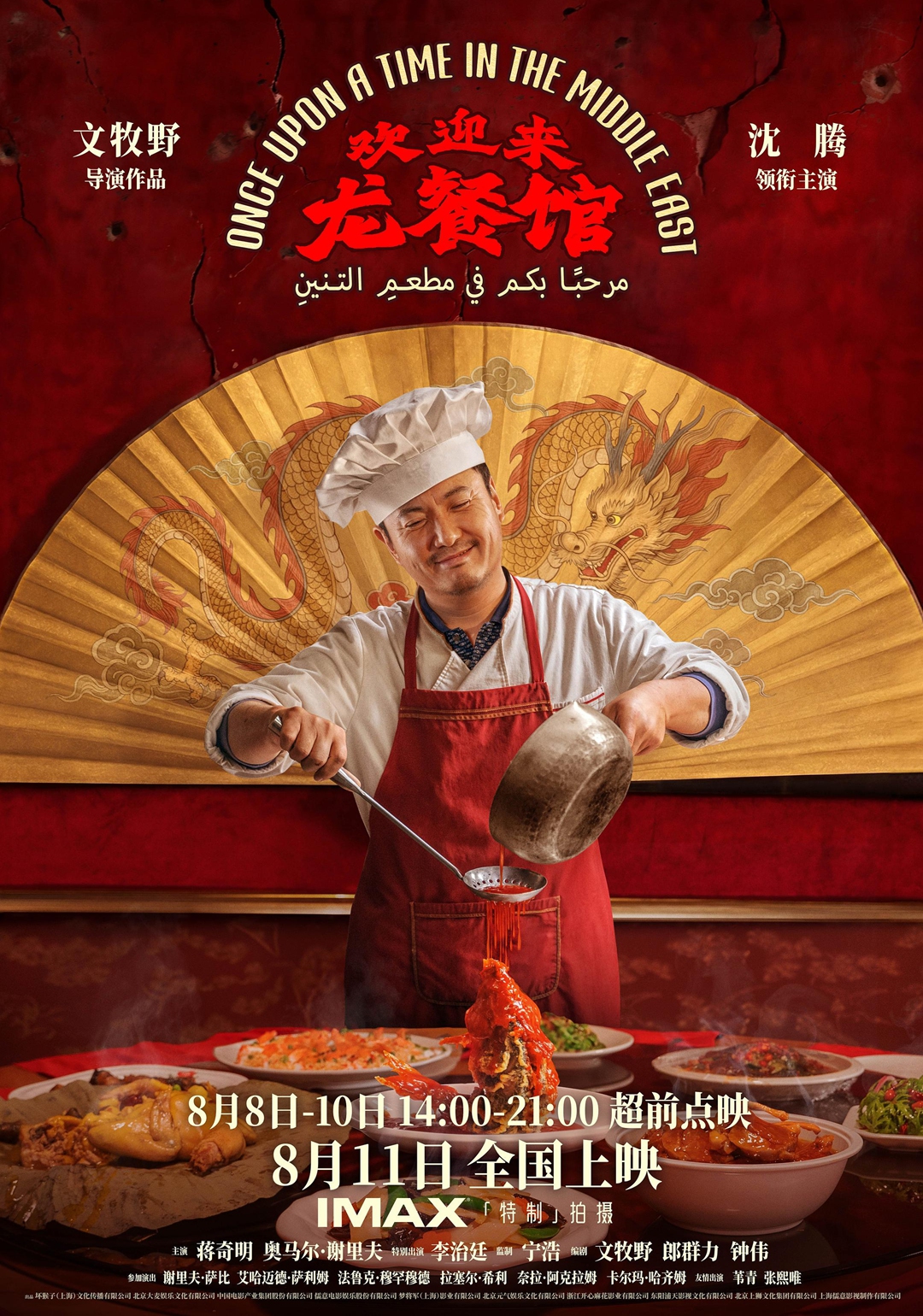
The excitement is understandable. Director Wen Muye has made something quietly radical: a war film that refuses spectacle.
There is a wedding scene in Once Upon a Time in the Middle East that stays with you long after the credits. In the middle of a war zone, people still find a way to dance, embrace, and cry as if tomorrow will never come. The joy is desperate and beautiful at the same time. Watching it, you feel the ache of a simple truth: These people should have been allowed every tomorrow. That single sequence captures what director Wen Muye has achieved. He has made a film that only a Chinese filmmaker could have made - because of a sensibility that refuses to treat war as spectacle or moral theater.
The commercial response in China has been equally striking. During the past weekend the film took in 373 million yuan ($55.35 million) at the box office, over 4 times the amount earned by Christopher Nolan's The Odyssey in the same market. Audiences walked out of the theater talking about war, food, and the value of ordinary life. The numbers confirm what the film itself demonstrates: a story told from the kitchen can still command a massive audience.
The story follows Xu Fu, an ordinary Chinese chef who travels to a Middle Eastern city (clearly modeled on Iraq around 2003) to work off family debt. With restaurant manager Ma Junsheng, he opens the Dragon Restaurant and serves Chinese food. Even after the invasion begins, the kitchen does not close. The kitchen becomes a fragile island where meals continue to be cooked while the war begins outside. Xu Fu is not a hero in a Hollywood sense. He does not pick up a gun or deliver speeches about freedom. He just keeps cooking.
What makes the film remarkable is how cleanly it rejects the familiar Western war narrative. Hollywood has spent decades following US soldiers into foreign cities, showing their courage, their trauma, and their brotherhood. Films like Saving Private Ryan and Black Hawk Down place the US experience at the center and often reduce the local population to a background threat or grateful recipients of rescue. Once Upon a Time in the Middle East turns the camera the other way around. It asks a blunt question spoken to an American officer: "Without you, where would the terrorists come from?" The line is not delivered as propaganda. It is offered as a practical observation about cause and effect. Violence creates more violence. Children who lose everything do not become extremists by nature; they do because the options for a normal life have been deprived.
The film makes this point through a recurring image: the knife. In Xu Fu's hands, a knife is a tool for chopping, flipping, and seasoning. It produces the bowl of "Xu Fu stew" that orphans finish and ask for more. In other hands, the same blade becomes a weapon. "The knife is not good or evil," the film suggests. "People are." The same logic applies to the children. Young Saif learns to cook under Xu Fu's guidance, kneading dough, controlling the flame, earning respect through a plate of food. Other kids the same age are packed into cars with bombs instead of books.
Here the Chinese director's approach proves smarter than the Hollywood model. Hollywood war films usually rely on scale, speed, and moral clarity: big battles, clear villains, and a central hero who grows through combat. The camera stays close to the soldiers, the soundtrack swells, and the audience is guided toward admiration or catharsis. Director Wen Muye does the opposite. He stays small, slow, and unresolved. By placing the story inside a kitchen rather than on the front line, he forces the viewer to confront the human cost without the distraction of heroic spectacle. Instead of telling us who is right, he shows us what is lost. This restraint is more demanding and ultimately more persuasive. It trusts the audience to connect the dots rather than feeding them a pre-packaged moral. Where Hollywood often ends with a sense of hard-won victory or noble sacrifice, this film leaves you with the quieter, harder realization that the real damage continues long after the shooting stops: in the minds of children and in the broken routines of daily life. That choice of focus is not just different; it is more honest and more intelligent.
This perspective feels especially Chinese in its emphasis on ordinary survival. Chinese culture has long treated food as the foundation of life: "Heaven is big, earth is big, but eating is bigger." The dishes in the film, from northeastern iron-pot stews mixed with local grilled fish to carefully prepared fried rice made from whatever ingredients remain, are not exotic decoration. They are the practical language of endurance. One of the most moving moments comes when Xu Fu cooks a simple stew for a group of orphans during their escape. What began as "leftovers not fit for the table" becomes a permanent item on the menu. Anything made with care can feed people. That idea carries more weight than any battlefield speech.
The film's approach to food and daily ritual reminds me of director Ang Lee's Eat Drink Man Woman. Lee used elaborate family dinners to reveal emotional truths that characters could not speak aloud. Wen transplants that same quiet method into a war zone. The kitchen becomes the moral center of the story. Steam, chopping boards, and shared tables matter more than explosions. In both films, cooking is never just cooking. It is a way of insisting that human connection still exists even when larger forces try to erase it.
A quiet but powerful metaphor runs through the story: the potato. A potato is harmless until it sprouts and becomes poisonous. The children radicalized by war are not born poisonous. They become so when the soil around them turns toxic. The film returns several times to the simple instruction "don't waste food." In peacetime the phrase sounds ordinary. In a war zone it becomes a statement about the waste of human lives. War does not only kill people; it spoils what could have been good.
By the final scenes, the Dragon Restaurant has become more than a business. It is a small example that another way of existing is possible. Children are learning to cook instead of learning to kill. The film does not claim this solves geopolitics. It simply shows that the most basic human desire, to eat well and live another day, remains the clearest common language across cultures.
The author is a reporter with the Global Times. [email protected]
。 8月26日消息,近日多名顺丰员工在社交平台爆料,收到内部邮件通知启动薪酬结构调整,将原有固定月薪的15%划归季度绩效部分,需要考核达标方可全额获取。 不少员工对此提出质疑,认为该调整属于变相降薪,调侃为 “付押金上班”。

B | 薪资争议尚未平息,顺丰公司内部加码的着装管控规则同时引发员工吐槽。 新规明确着装不得露膝盖、禁止穿着洞洞鞋,同时不允许佩戴帽子,有员工无奈吐槽 “秃头的都要哭了”。多重管理细则落地后,不少员工心态失衡,认为职场工作演变为过度管束。
有顺丰内部员工向媒体证实调薪信息,本次薪酬结构调整仅针对非一线岗位,一线快递员不在调整范围内。

C | 财报数据显示,顺丰控股近年整体经营保持稳健。2026年第一季度,公司实现营业收入741.42 亿元,同比增长6.14%;归母净利润25.26 亿元,同比增长13.05%。 其中在成本端,公司推进经营激活策略,结构性降本成效显现,一季度毛利101.9亿元,同比提升9.7%,毛利率13.7%,同比上涨0.4个百分点。
【本文结束】如需转载请务必注明出处:
责任编辑:秋白
文章内容举报
。Current article:http://8vvo.feizengbubaipeirangnalouchuo.sbs/list_c9o7i/htus9q1.html
Published on:19:38:21
我的网站相关内容
 Token工厂、世界模型、AI手机,WAIC的三大新风向
 宝马计划重启增程动力系统 网传第六代宝马X5或将首发搭载
 当山东舰航母编队遭外舰抵近侦察……
 县委常委会会议暨县委党的建设工作领导小组会议召开
 未来5年人均预期寿命稳步提高到80岁,如何实现?
 B费谈PFA获奖:得到对手的认可并不容易 本赛季我想要多进球
- ·是否太方便:亚马逊Dash被判违反消费者规定,只按一个按钮
- ·商务部:1-7月全国网上商品和服务零售额增长4.8%
- ·부산중기청, 지역 조선해양기자재업계와 정책지원 방안 논의
- ·比亚迪与小桔充电官宣共建15000座兆瓦闪充桩
- ·多款全新 Fallout 76 Funko Pop 玩偶将于 11 月推出,包含避难所小子、核子可乐女孩等
- ·美国进步派领先,共和党候选人求AIPAC别帮忙,3000万美元白花了,云景史记,原创 美国进步派领先,共和党候选人求AIPAC别帮忙,3000万美元白花了
- ·四川省地震局:成都高新减灾研究所冒用“中国地震预警网”名义发布地震预警信息
- ·哈利伯顿不满复出首战安排:客场无直播令人震惊
我的网站最新内容
- ·钱江水利:上半年净利润1.08亿元 同比增长2.26%
- ·蒂姆·库克,中国是一条运河,iPhone是一座山。
- ·微软小兵富生、叶秀等五位全职大师还活着
- ·极星Polestar 4 SUV无伪装实车曝光:新增后窗、方正尾门设计
- ·三星:2021年最早大规模生产3nm工艺
- ·提升产业集群资源协同配置效率 河北加快培育产业大脑
- ·新西兰约2500名医生今起罢工25小时
- ·赛迪顾问:国家级园区培育未来产业关键举措与提升路径
- ·美对华撤销芯片出口,中国减持448亿美元外汇
- ·从买家电到设计生活!卡萨帝AI全场景体验重塑渠道价值
- ·新赛季首金!中国泳坛王牌之师夺冠,男女混合团体不敌俄罗斯队
- ·2025粤港澳车展:雷克萨斯NX 260湾曜特别版亮相
- ·开拓者队记谈杨瀚森计划:仍将更多打发展联盟
- ·贵州国资成立产业并购股权投资基金
- ·交通运输部:已启动首批“人工智能+交通运输”典型应用场景项目创建工作
- ·Women Hoarding Birth Control, Abortion Pills After Roe v Wade Overturned, Media Says
我的网站热点内容
- ·涓涓流推出自主视频社交产品“多闪”,界面抢占先机
- ·德隆:老詹打控卫将场均13-14助攻 像魔术师一样
- ·8月25日人民币对美元中间价报6.7852 下调11个基点,8月25日人民币对美元中间价报6.7852 下调11个基点
- ·Rolls-Royce cutting up to 2,500 jobs in an overhaul of the UK jet engine maker
- ·市场监管总局公布经营者集中审查助力整治“内卷式”竞争典型案例
- ·《龙餐馆》罗永浩看泪崩:生平第一次 人多哭得放不开
- ·德媒:海登海姆球迷破例为穆勒送上掌声,以表达对他的敬意
- ·【园所动态】“开学总动员,凝心齐聚力”—开福区教育局第四幼儿园、东原麓印长江幼儿园2025年春季开学工作
- ·Akhanda 2 Crisis: Balakrishna’s Team Strategizes New Release Timeline
- ·内马尔社媒晒为儿子卢卡庆祝15岁生日照片,卡卡留言祝福
- ·山西运城聚焦能源转型、产业升级 打造多元增长极,山西运城聚焦能源转型、产业升级 打造多元增长极
- ·Graphic New Footage Shows Uvalde Police Waiting Inside Hallway for 77 Minutes During Shooting
- ·巴旦木公主晒新美照 网友当场喊妈:喜提父亲卢本伟
- ·【异动】氧化铝一看空商品期权合约大涨62%
- ·王鑫的马桶mt被腾讯“屏蔽”,在推出之夜被多个频道“屏蔽”。
- ·US will monitor Russian ‘grom’ strategic nuclear exercise